

AviTrader MRO360° - End-of-Life Management for Commercial Aircraft
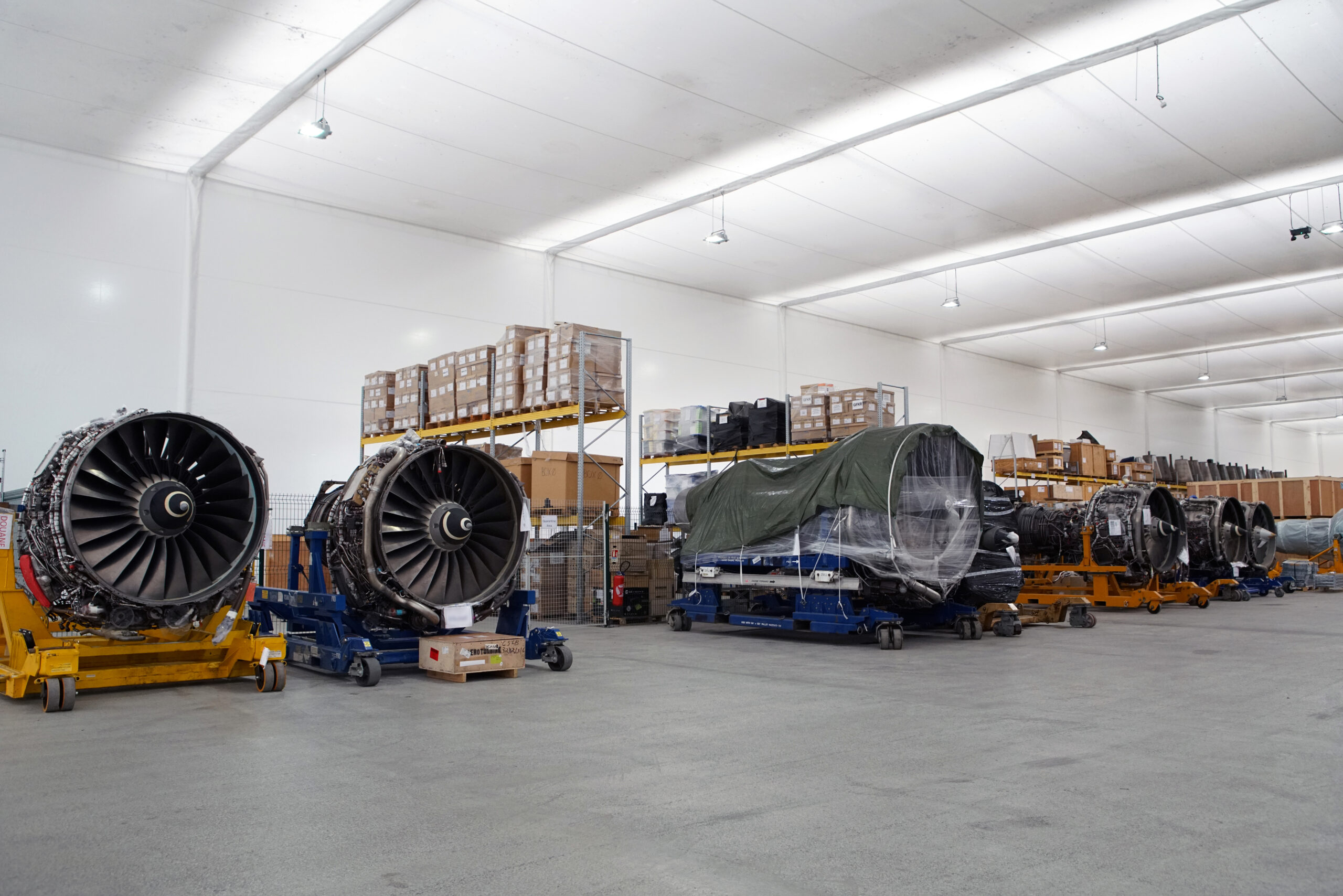
In the June issue of AviTrader MRO360°, Valentina Pilshchikova, Engines & Parts Trading Sales Manager at Vallair, shares with David Dundas the various aspects of end-of-life management for commercial aircraft.
“The choice to part out, store or sell an aircraft as a whole is fundamentally an economic analysis.
Deciding to part out is simple: do it if the value of the parts is higher than the value of the aircraft as a complete asset. It is straightforward when you consider that the market value for an engine, for example, can be twice its base value due to supply chain disruptions and technical issues. For instance, Vallair has observed that GTF engines on A320neo aircraft can command higher lease values than the value of an entire aircraft. We are seeing that relatively young aircraft with strong engines are being down because of this.
“Storage becomes the preferred option when current demand is weak or when the market makes it difficult to sell. Owners may wish to store an aircraft and depreciate the asset slowly, rather than sell it at a low price and realise the loss immediately. Then, when the market improves they can resume operation of the aircraft or sell it a more favourable price.
“Lastly, sale of whole assets may be the best choice for lessors who are faced with costly transitions for mature aircraft, in which case they may prefer to monetise their assets quickly.
“When deciding the fate of an end-of-life aircraft, the main driving factor is which option provides the fastest or best commercial return.”
To read the full article, click here.
Article courtesy of AviTrader.

Vallair Industry obtient la certification pour la maintenance de l'A330neo
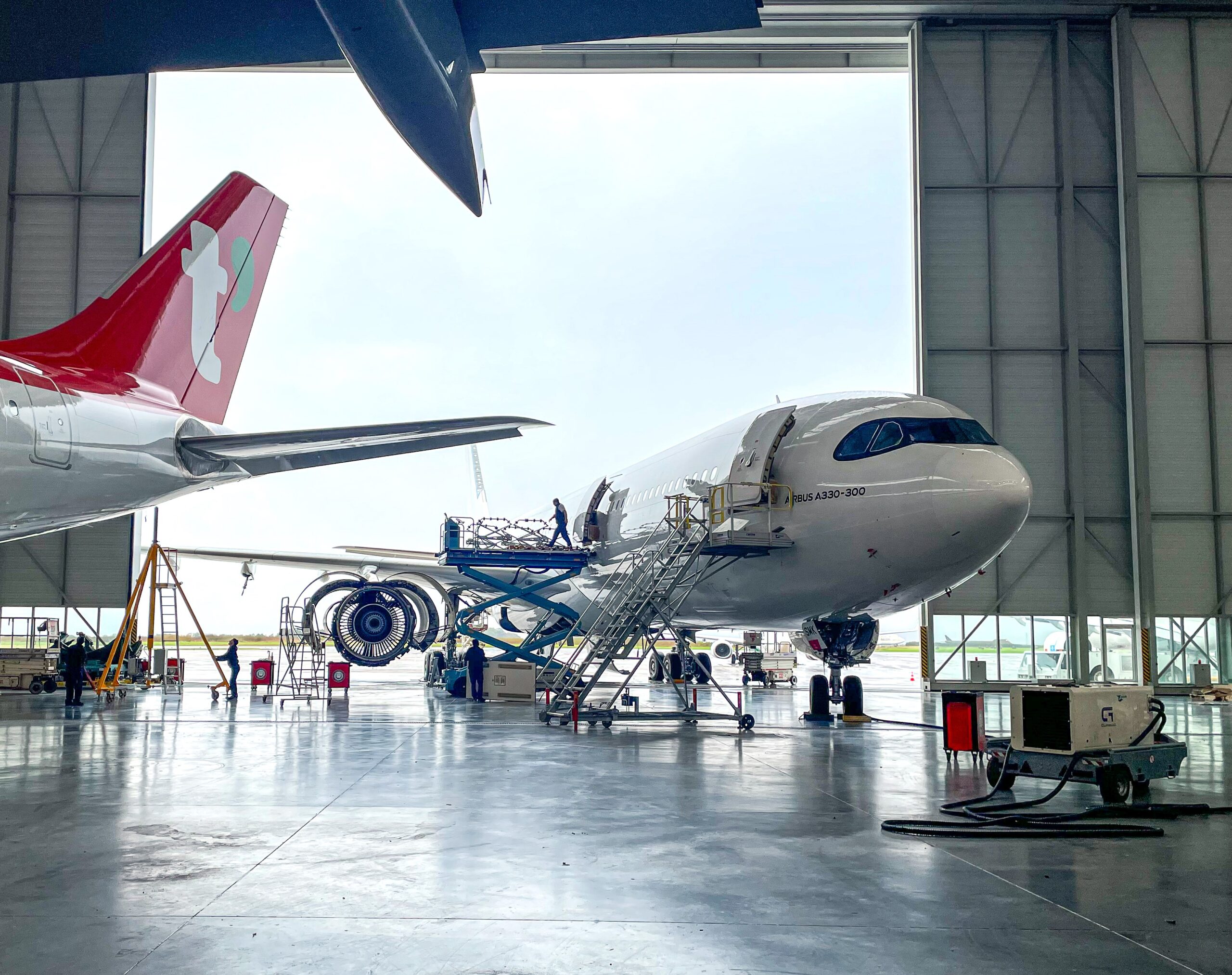
Vallair Industry, l’une des principales entreprises de MRO en France, élargit ses capacités avec l’obtention de la certification pour effectuer la maintenance en base de l’Airbus A330neo sur son site de Châteauroux.
Déjà certifié pour la maintenance des A330ceo, A340-200/300/500/600, Vallair Industry, avec la certification pour l’A330neo complète son offre de service pour les gros porteurs Airbus et ouvre la voie du futur, préfigurant la certification pour l’A350.
L’adoption croissante de l’A330neo par les compagnies aériennes augmente les besoins de prestataires qualifiés de maintenance. Avec cette nouvelle certification Vallair Industry pourra, sur son site de Châteauroux, répondre aux demandes de visites de maintenance lourde programmées, inspections structurelles, modifications et autres services techniques associés, pour les versions A330-800 et A330-900.
Le site de 8 500 m² de Châteauroux est dédié à la maintenance des Airbus et peut accueillir cinq appareils de la taille d’un A321, ou une combinaison d’A330 et d’A321. Il propose une gamme complète de services de maintenance incluant le contrôle non destructif (CND), les transitions de location, l’aménagement et la rénovation cabine, en complément de ses services de structures aéronautiques, de réparation et de démantèlement de moteurs, de logistique, de parking et de stockage.
Vallair Industry, acteur de la réindustrialisation de la France et contributeur de sa balance commerciale
La certification pour l’A330neo enrichit l’activité de maintenance d’appareils gros-porteurs de Vallair Industry entièrement basée en France et renforce sa contribution à la réindustrialisation de la France.
De plus, Vallair Industry compte parmi ses clients un grand nombre d’opérateurs internationaux, ce qui lui permet, en offrant des prestations de maintenance réalisées sur le territoire national pour des clients étrangers, de peser positivement dans la balance commerciale de la France.
« Cette nouvelle certification conforte notre position de partenaire de maintenance de confiance pour les compagnies aériennes exploitant des flottes gros porteurs modernes, renforce le savoir-faire industriel français et consolide l’ancrage territorial de nos activités.
À Châteauroux, nous avons recruté et formé une équipe expérimentée. Aircraft Academy, organisme de formation du groupe Vallair, qui dispense une formation encadrée en situation de travail (SOJT) pour l’A320 étendra prochainement cette formation à l’A330neo afin de sécuriser un vivier de techniciens qualifiés de maintenance aéronautique.
En ayant développé un centre de formation au sein de nos installations, nous participons à la réindustrialisation du territoire tout en maintenant en France un savoir-faire aéronautique de pointe.» déclare Grégoire Lebigot, président du Groupe Vallair.
Vallair attains A330neo maintenance approval at Châteauroux facility in France
Châteauroux, France, 23rd June 2026: Vallair, a leading aviation asset lifecycle support organisation and provider of aircraft maintenance, repair and overhaul (MRO) services, has received regulatory approval
to perform base maintenance on the Airbus A330neo at its state-of-the-art facility in Châteauroux, France.
The approval marks a significant milestone in the Company’s continued expansion of widebody maintenance capabilities and positions Vallair to support a growing global fleet of next-generation A330neo aircraft.
With airlines increasingly adopting the A330neo for its fuel efficiency, range and operational flexibility, demand for qualified maintenance providers continues to rise. The new approval enables Vallair to meet the growing demand for scheduled heavy maintenance checks, structural inspections, modifications and related technical services for both the A330-800 and A330-900 variants.
Grégoire Lebigot, President & CEO – Vallair Group, says “This approval reflects our investment in technical expertise, training and infrastructure. It strengthens our position as a trusted maintenance partner for airlines operating modern widebody fleets. The addition of A330neo capability broadens Vallair’s service portfolio and creates new opportunities to support existing customers while attracting operators seeking approved maintenance capacity for the aircraft type.”
The 8,500m² facility in Châteauroux is dedicated to the support of Airbus aircraft, and is able to accommodate five A321 size aircraft, or a combination of A330s and A321s. It offers a full suite of maintenance services including NDT, lease transitions, LOPA change and cabin refurbishment, which are offered alongside its existing aerostructure services, engine repair and teardown, logistics, parking and storage.
“With such a comprehensive background in MRO, we welcome the opportunity to extend our widebody capabilities,” continues Lebigot. “There is rich aviation heritage within the region and since we opened this new hangar, we have recruited an experienced team, capturing the exceptional expertise available. We believe it is vital to share knowledge with young technicians and Aircraft Academy, a Vallair Group company, delivers its mentored on-site structured on-the job-training (SOJT) for the A320 here. We will extend this to the A330neo as soon as possible to secure our pipeline of skilled aircraft maintenance engineers.
“This is a new chapter for Vallair and we look forward to a robust and thriving future for Châteauroux.”
To read the Press Release in French, click here.
InsideMRO - Sustainability and MRO
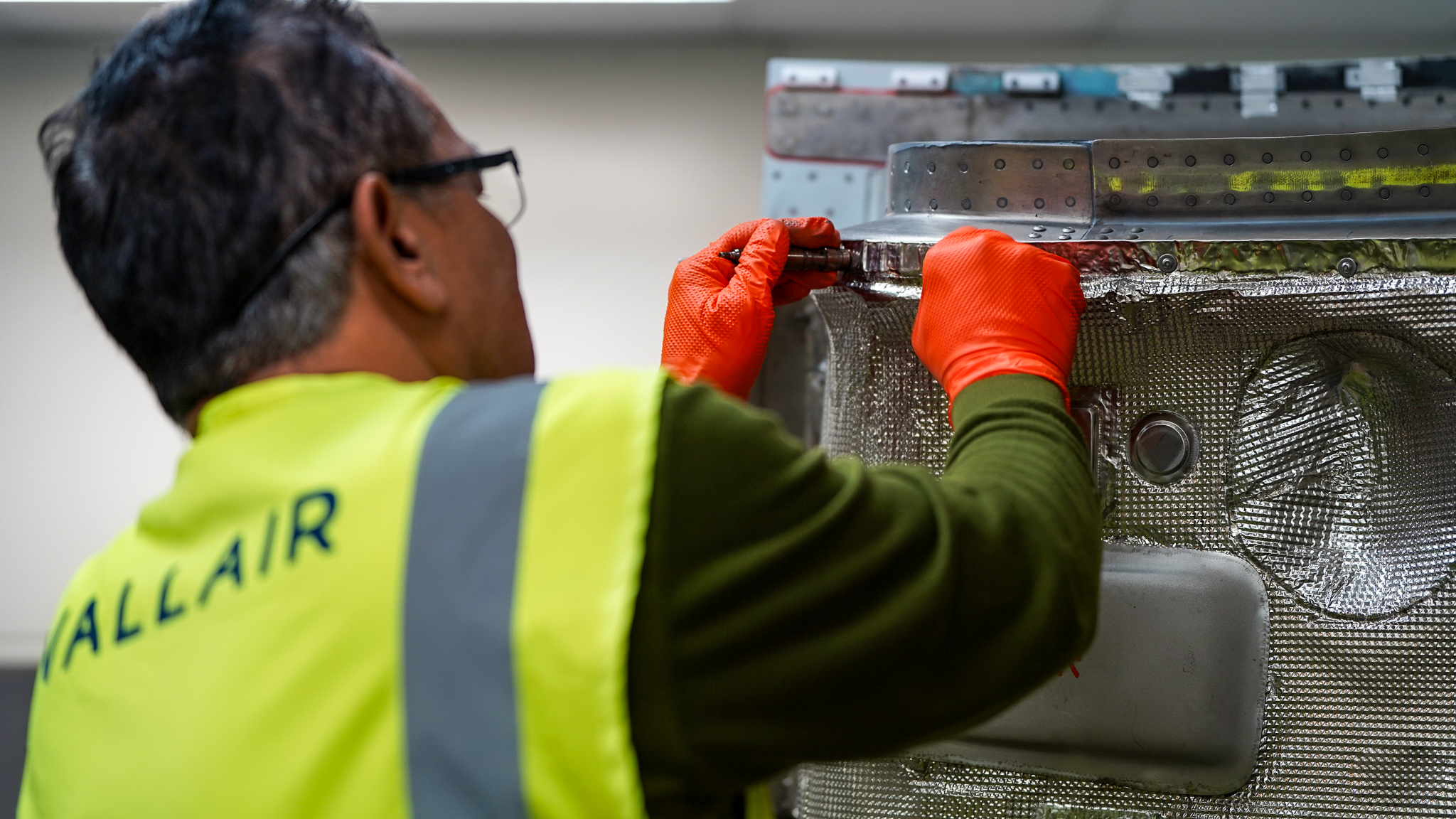
In the latest issue of InsideMRO, Pascal Parant, Chief Commercial & Marketing Officer at Vallair, shared industry insights on how OEM choices are affecting the aftermarket and inhibiting sustainable practices of repair and refurbishment.
Speaking to Keith Mwanalushi, Parant cites a growing monopoly dynamic and the shrinking number of indepedent sources for subcomponent materials as major obstacles to effective repairs.
“I fully understand that OEMs invest heavily in research and development and certification, and that they have to recover these costs through the aftermarket. But a combination of single-source parts, licensing constraints, royalties and other barriers is reducing the number of capable repair providers, even as customer costs continue to rise.
“The consequence of this environment is that the choice to repair or scrap a component is primarily driven by cost and ends up having little to do with sustainability. Although there is very tangible sustainability benefit in USM, when Jet A-1 prices are high and LLP costs are climbing roughly 10% year over year, prioritising sustainability easily becomes expensive and feels more like a luxury rather than a necessity.”
To read the full article on the InsideMRO website, click here.